Ten years of no
Yuval Rooz opened his keynote at Canton Summit by thanking the room for rejecting him for ten years.
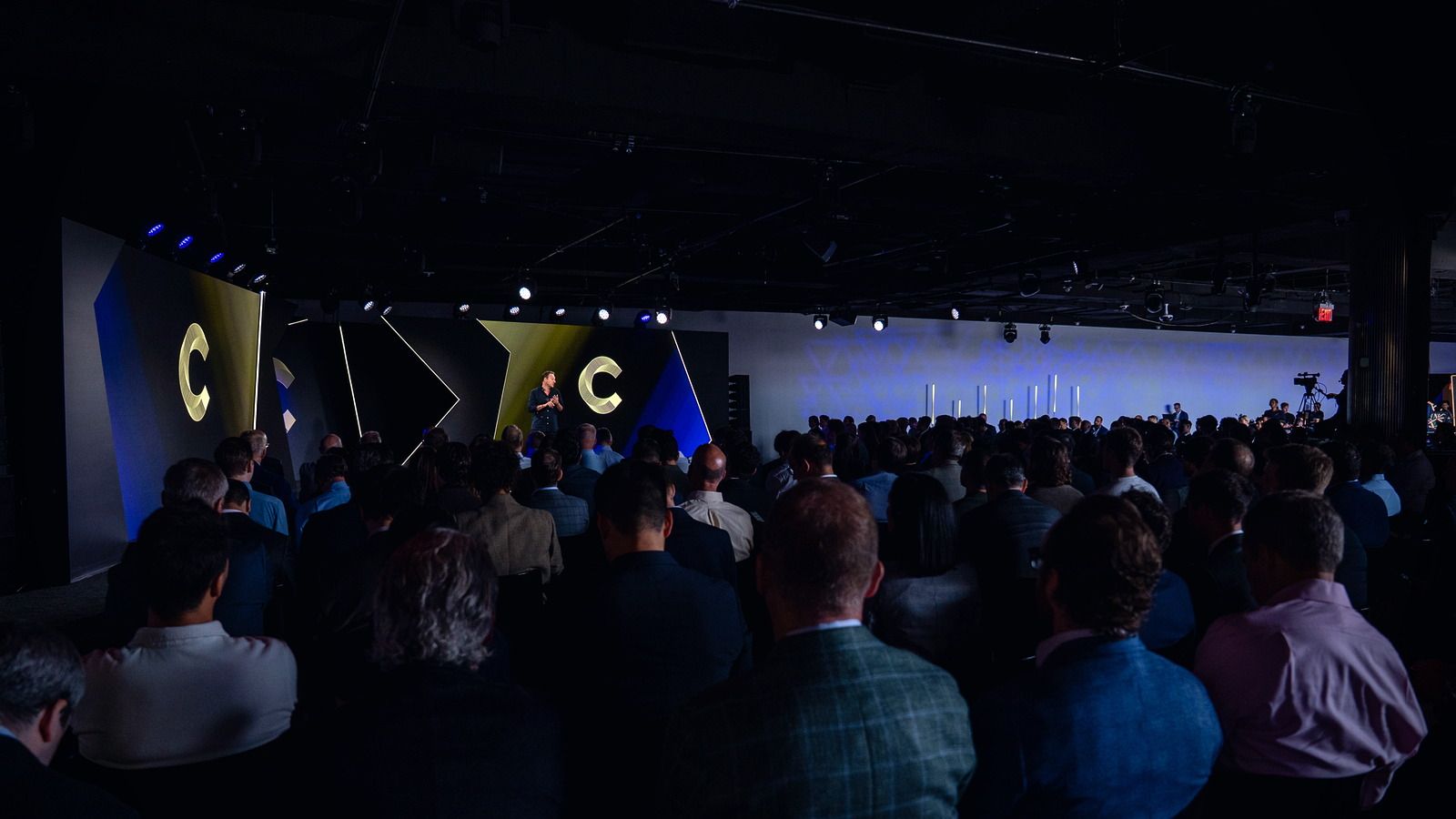
Yuval Rooz opened his keynote at Canton Summit by thanking the room for rejecting him.
Not as a joke. For the first ten years of Digital Asset's twelve year history, the answer from banks, custodians, clearing houses and regulators was the same one, over and over. It will not work. We cannot use it. Our regulators will not accept it. His line to the room was that every one of those refusals made Canton better, because each one exposed something they had got wrong or had not built yet.
It is an unusual way to open a keynote, and it is also the most useful thing in it. A rejection from an institution that settles real money is free product feedback from the only audience that matters.
What did not change
The vision, he said, never moved. Assets that can move at any hour. Assets that can interact with other assets. Markets that do not stop because a system does.
The hard part was never describing that. The hard part was building it underneath institutions that are already settling trillions of dollars and cannot pause while you work. That constraint produced the one strategic decision everything else follows from: build with the financial system rather than against it.
Three things that had to be in the architecture
After years inside real workflows, three requirements turned out to be non-negotiable, and all three had to be there from the first line of code rather than added later.
Privacy. Most public chains began from the position that everyone should see everything. Canton started from the opposite end. If you are not entitled to see a transaction, you do not receive the data at all. The regulator sees what it is entitled to see, your counterparty sees its side, and everyone else sees nothing. Privacy is not a feature here. It is the shape of the thing.
Governance. Rooz went further than most vendors would and said governance may matter more than the technology. If institutions are going to depend on a network, no single company can control it. Canton is governed by the institutions that depend on it, with DTCC and Euroclear chairing the foundation alongside large traditional finance firms, crypto native companies and infrastructure providers. Same table, no single party in charge.
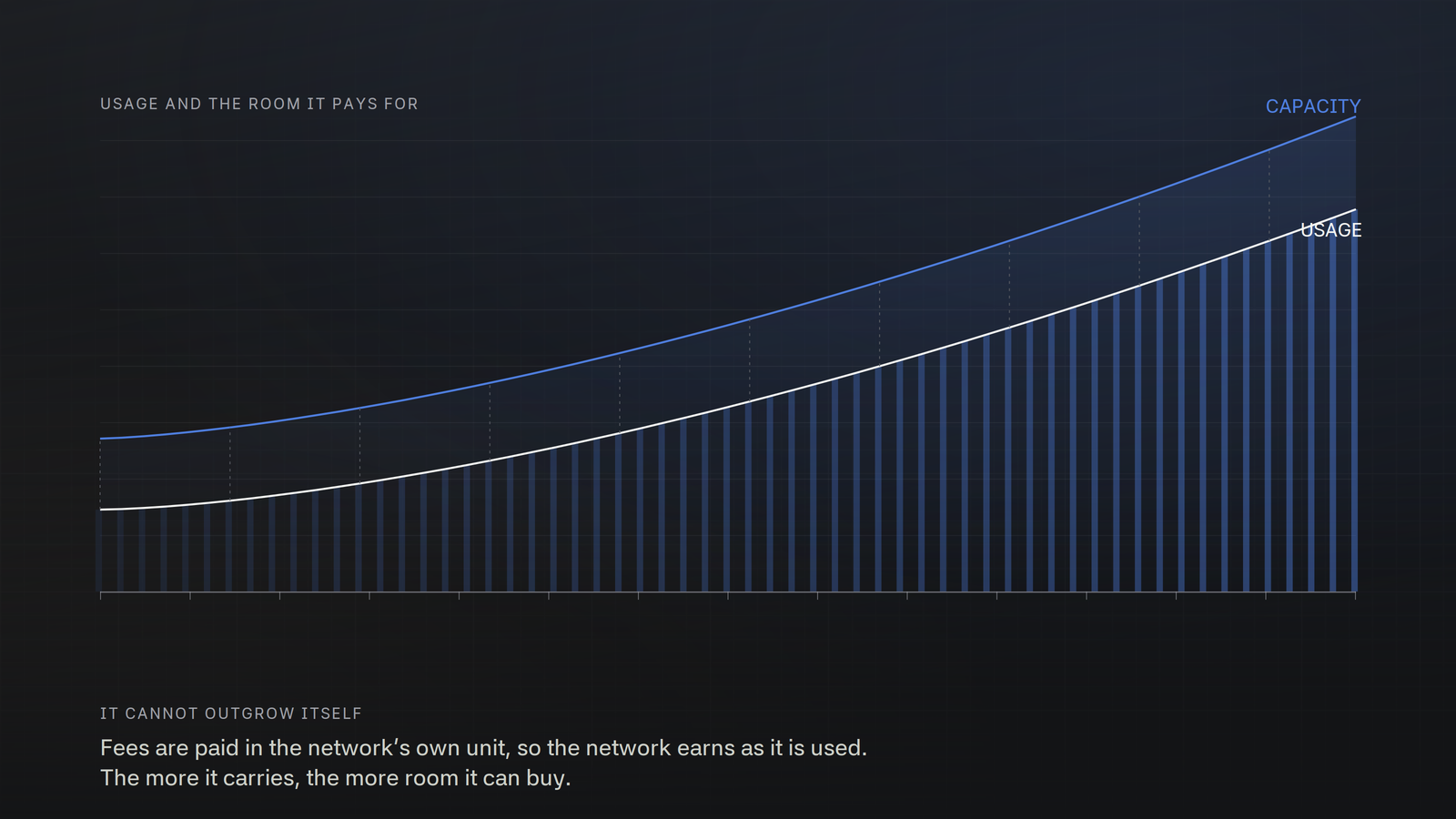
Economics. The design goal was that a finance director can predict what the network will cost next year. Fees are priced in dollars. Value comes from real transactions. And the participants who bring activity share in what that activity creates. His position on this draws criticism and he keeps it anyway: if the network creates no utility, it should not have any value.
When the answer changed
The second half of the keynote was the arithmetic.
Broadridge said no first. At the end of 2024 its repo platform was settling around $1.5 trillion a month. Today it is roughly $7 to $9 trillion a month, with more than $300 billion in US Treasury repo settling on Canton every day.
Rooz was careful not to oversell that number. The repo market moves $13 trillion a day. On his own framing, Canton is a drop in the bucket and they are still early.
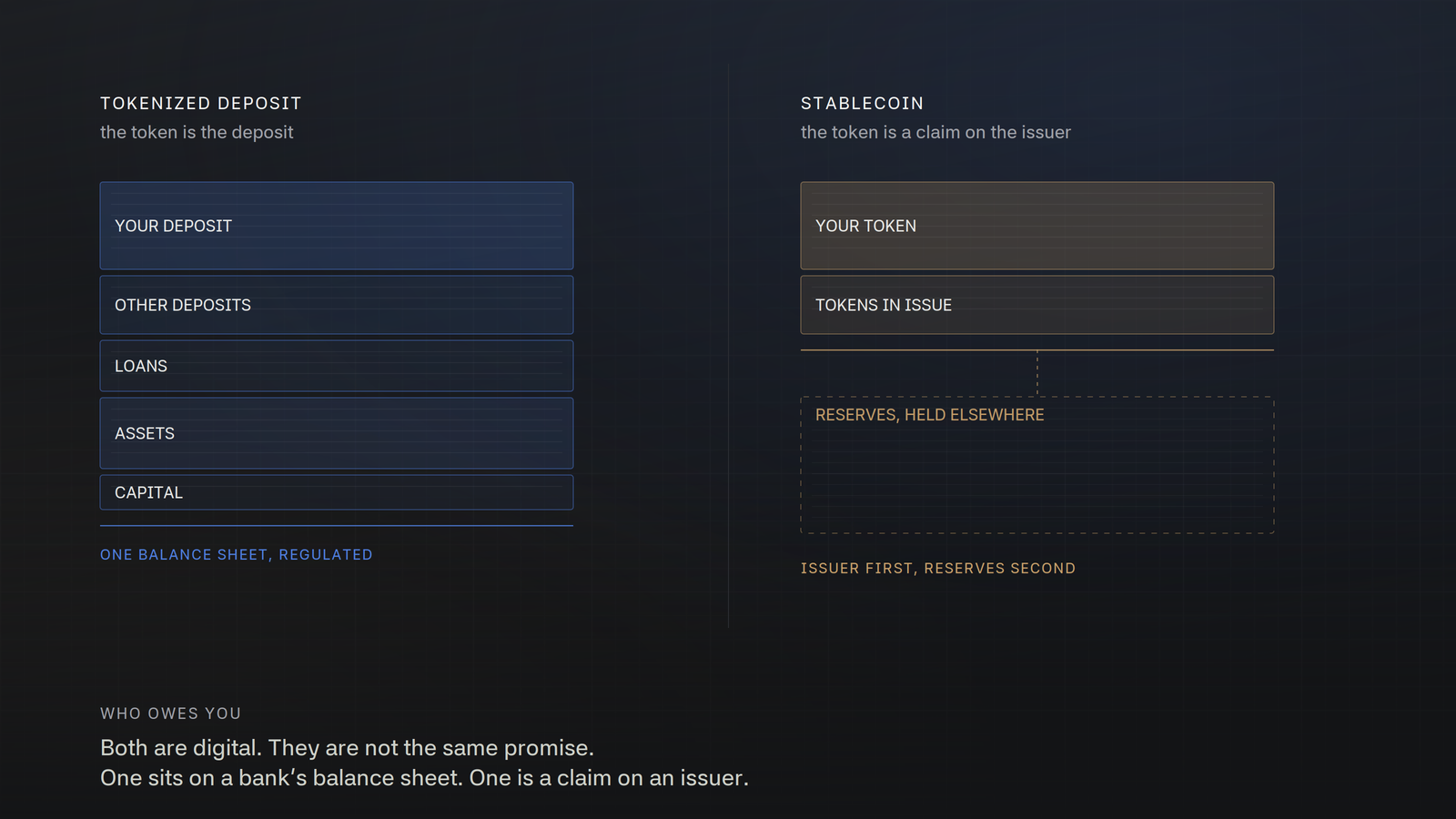
A year ago DTCC said yes to moving US Treasuries and equities in real time, around the clock, in production. JPMorgan said yes to tokenized deposits. Goldman Sachs said yes to building its digital asset platform. HSBC, BNP, Nasdaq, SocGen, Lloyds, Visa and MUFG followed. More than 650 firms have connected to the network in two years.
The prize
The closing argument was not about tokens. It was about idle capital.
A company Digital Asset has been working with holds billions in operating cash flow that the system will not let it deploy in time. Over a year that is hundreds of millions of dollars of economic value doing nothing. Multiply that across the balance sheets in one conference room and the scale of the waste becomes the point.
Then there is the part nobody can forecast. Once the operating cost of moving and settling assets approaches zero, the financial products that become possible are not predictable from here. Rooz reached for 1996 and the people plugging computers into the internet with no idea what would eventually run across it.
The line worth keeping
Near the end he said something that belongs to everyone building here rather than to Digital Asset: they built the system, and only the people in the room can build the network.
We take that literally. Infrastructure is not finished when the protocol works. It is finished when someone runs a validator that stays up at three in the morning, when a wallet makes a transfer legible to a person who has never heard of a party ID, and when an explorer answers the question a compliance officer actually asked.
That is the work we do on Canton, and it is why a keynote about ten years of rejection reads, from where we sit, as a description of the job rather than a victory lap.
Canton is ready, he finished. The question is whether the rest of us are.